/
COMPETITIVE INTELLIGENCE & COMPETITOR RESEARCH EXPERT
Competitive Intelligence

We're the secret weapon that reveals the DNA of your competitors and how to beat them.
Why teams choose PH1
/01
Kickoff and finish research studies faster
Stop waiting around for research. Get initial insights within 10 days.
/02
Hear directly from your ideal customers
We recruit the exact customer profile you need, including your competitor's customers.
/03
Protect your IP while getting honest feedback
Don't worry about your brand and ideas getting published — clients frequently hire us because we can anonymize assets and brands.

The research & strategy partner for teams building intelligent experiences
/
FOUNDED IN 2012 /FROM STARTUPS TO THE FORTUNE 500
TRUSTED BY 300+ COMPANIES
/
QUALITATIVE COMPETITIVE RESEARCH CONSULTANCY
Empower your product, marketing, and sales teams with evidence-backed improvements.
Product, marketing, sales leaders bring us in when:
Benchmark a new product or feature against competitors.
Need honest feedback and anonymize brand before researching.
Find out exactly what is causing customers to churn.
Get intelligence about your competitor's latest release.
See how your competitors' customers use their products.

/
BENCHMARKING · WIN/LOSS · BUYER INSIGHTS
AI finds the signals, we get the answers that wins more customers.
AI has made it easier than ever to collect data about consumers. The issue is that data lacks the context and confidence to be useful when making important decisions. PH1 solves that by giving your team unmatched access to what prospective customer and lost customers need and want. This includes getting feedback on a new product, services, or how you score against varous competitors.
We anonymise your brand and assets, so an unreleased product or capability never becomes public.
Competitor Product Evaluation
Your customers walked through their products
Win/Loss Analysis
Why deals close, why they do not, why they churn
Buyer Insights Research
Who decides, and what they will actually buy
Customer Segment Analysis
Who succeeds with your product, who struggles, and why
Competitive Benchmarking
Same tasks, same users, scored head to head
Market & Audience Research
Sizing, demand and willingness to pay
Product Impact Podcast
Secrets to unlocking the value of AI
Our podcast, started in 2023, is the ultimate hub for learning from the leading voices in AI. We focus on delivering essential lessons for product teams determined to stay ahead of their competition.
/
BLOG
Latest insights

digital-transformation
/
Jul 9, 2026
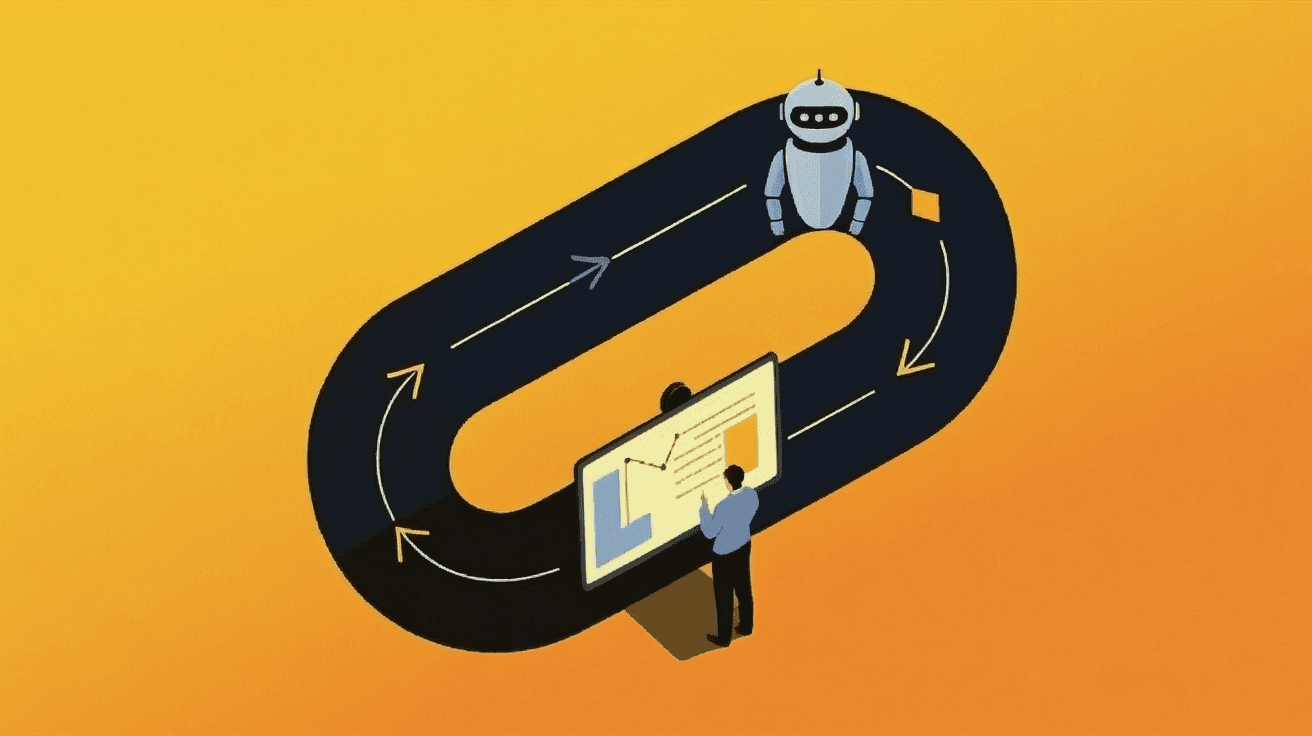
Search: The Digital Transformation Project Quietly Hurting Your Customers
Broken site and enterprise search quietly erodes perception, acquisition, retention, and revenue. See why it's the transformation fix to prioritize now.

digital-transformation
/
May 23, 2026
AI Will Destroy University Website Traffic. There's Only One Path Forward.
Google's AI is replacing your website in the applicant journey. Here's how university marketing teams should respond before it's too late.
/
BLOG
Latest insights
digital-transformation
/
Jul 9, 2026
Search: The Digital Transformation Project Quietly Hurting Your Customers
Broken site and enterprise search quietly erodes perception, acquisition, retention, and revenue. See why it's the transformation fix to prioritize now.
digital-transformation
/
May 23, 2026
AI Will Destroy University Website Traffic. There's Only One Path Forward.
Google's AI is replacing your website in the applicant journey. Here's how university marketing teams should respond before it's too late.
/
FAQ
Frequently Asked Questions
What is competitive intelligence and how is it different from market research?
Competitive intelligence is comparative evidence on how you perform against the alternatives a customer could choose, and on why buyers pick one over another. Market research sizes a category and describes its audiences. Competitive intelligence answers a narrower question faster: where you stand against named competitors, and what is driving that result.
What is competitive benchmarking and how do I know where we really stand?
Competitive benchmarking tests your product and named competitors on identical tasks with the same participants, scored on task success, time on task, errors and abandonment. You know where you really stand because the comparison is built to be comparable rather than asserted, and the methodology is documented so it survives a challenge in a board meeting.
What is win/loss analysis and what will it tell me that sales cannot?
Win/loss analysis interviews buyers after the decision is made, won and lost, and codes the reasons by theme, segment and deal stage. Sales reports the reason the buyer gave them, which is usually price. Buyers tell a neutral third party the reason they did not want to have the conversation about, which is usually something else.
What is buyer insights research and how does it help us win more deals?
Buyer insights research maps the buying group: who decides, who influences, who blocks, what criteria each role scores you against, and which of your offerings they will actually buy. It helps because most lost deals are lost to a person you never spoke to, against a criterion nobody told you about.
How do I find out why customers are churning?
By interviewing the people who left, close enough to the decision that they still remember it. We code churn drivers by theme and segment and identify the signals that preceded the exit, so you can see it coming next time. Exit surveys capture the reason people are willing to type, which is rarely the reason.
How do I research competitors’ customers without them knowing?
We recruit the exact profile you want to hear from, including people currently paying a competitor, and walk them through that product, service and marketing. Participants are screened and briefed without your name attached, so neither they nor your competitor learn who asked.
Can you run a competitive study without revealing who commissioned it?
Yes, and being an external vendor is what makes it possible. Studies run anonymously, so an unreleased product, a new positioning, or even your interest in a category stays confidential. Reporting is structured to respect whatever disclosure limits apply.
How many competitors should I include in a study?
Two or three usually gives you everything a longer list would. Past that, cost rises faster than insight, and the differences that change a decision are rarely found at the bottom of the set. We will tell you when a smaller study answers the same question.
Does our own product need to be in the study?
Not always. Benchmarking compares you directly against competitors and needs your product in it. Competitor product evaluation works entirely on the alternatives, which is the right choice before a launch or when you are entering a category you do not know well.
Can we just use AI for competitive research?
You can, and so can your competitors, from the same models trained on the same public material. What comes back is the consensus view of your category: a fine starting point and a poor basis for advantage. We use AI as well, to scan faster and shape questions. What it cannot reach is what a competitor’s customer says out loud when asked why they stay.
Should we run competitive research in-house or hire a partner?
Internal competitive reviews are run by people with a stake in the result, and they tend to confirm what the team already believed. An external partner tests every product the same way including yours, reaches your competitors’ customers in a way an internal team cannot, and reports when you are ahead and the gap is not worth closing.
How do I benchmark our conversion funnel against competitors?
The same participants run the equivalent flow on each product, so comprehension, trust and pricing clarity are measured at every exit point across all of them. You get step-level comparison rather than an overall score, which is what tells you where the money is actually leaking.
What competitive research has PH1 done, and for whom?
Competitive evaluation of AI features for Microsoft. Benchmarking and usability testing in retail banking for BMO. Benchmarking and journey research for the University of Waterloo. Benchmarking across retail and consumer channels for Under Armour. Similar work for Dell Technologies, Vancity, Sunshine Coast Credit Union and Tourism Vancouver.
How long does a competitive study take and what does it cost?
Most start within two weeks of a signed agreement, with recruitment adding about a week. If the project is a rush, we can get you initial insights within 10 days. An expert review against two named competitors turns around in about a week. Cost scales with the number of competitors, flows and segments, and each expertise page carries its own range.