AI Strategy
/
feb 16, 2025
Design of AI: One of the World’s Leading AI Strategy Podcasts for Product, Design, and Research Leaders
AI did not arrive overnight. It quietly embedded itself into roadmaps, workflows, research practices, and executive mandates long before most organizations had the language or frameworks to reason about it responsibly.Design of AI began in 2023 because we kept hearing the same concern from product, design, and research leaders across industries:
/
AUTHOR

Arpy Dragffy
“We’re being pushed to move faster with AI, but no one is slowing down to ask if we’re making the right decisions.”
That gap between acceleration and judgment is why this podcast exists.
Pride in the Growth, and What It Signals
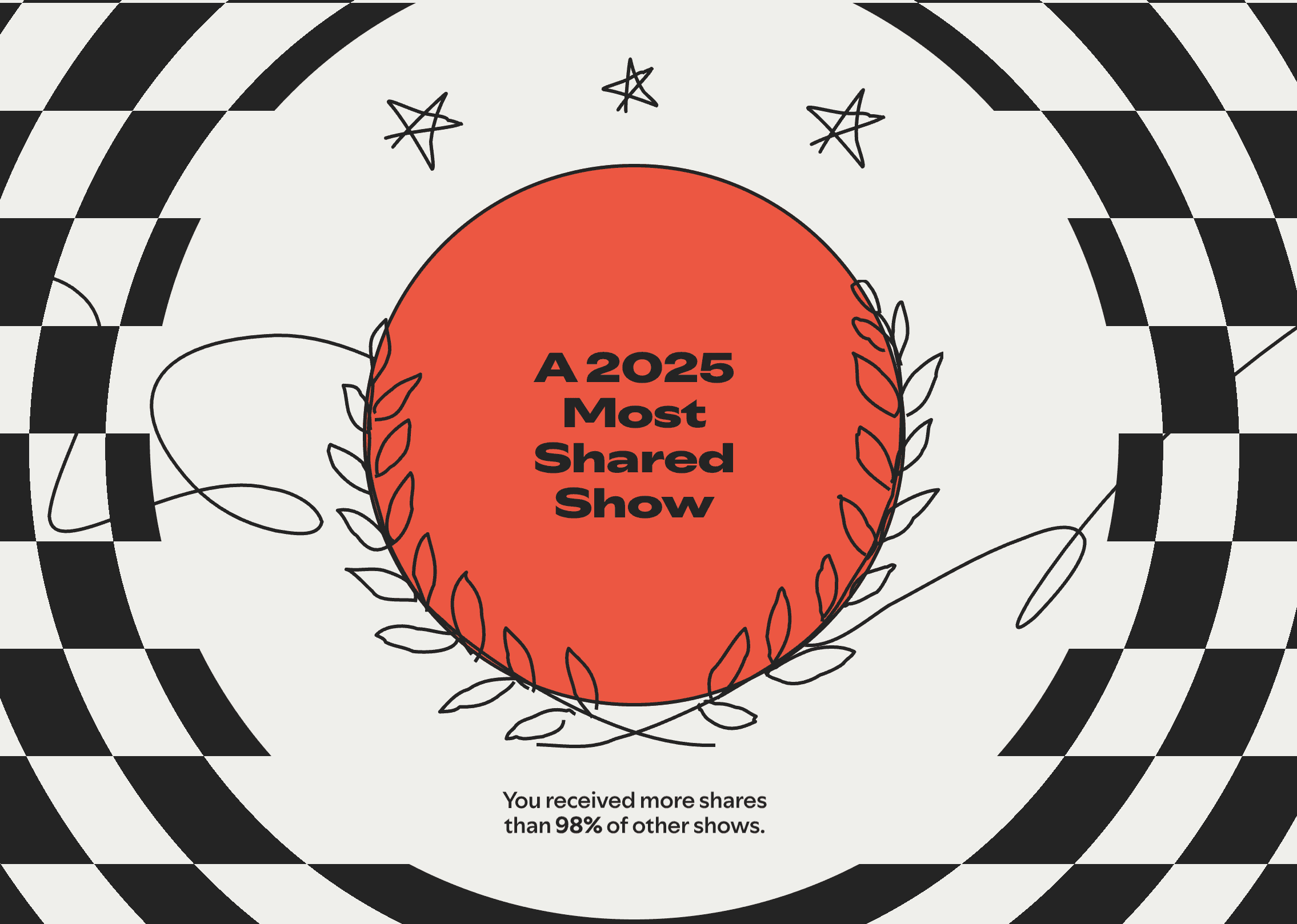
In 2025, Design of AI became one of the fastest-growing AI podcasts globally. It ranked in the top 2% of podcasts worldwide by shares, was recognized as a Rising Star, and grew 350% year over year.
We are proud of this growth not because of scale for its own sake, but because it signals a shift. Practitioners are actively seeking conversations that treat AI as a strategic, human, and organizational challenge, not just a technical one.
Why We Started Design of AI
Design of AI was created after years of advising organizations that were being told to “add AI” without clarity on:
Where real customer value exists
How trust is earned or lost in probabilistic systems
When automation weakens expertise instead of strengthening it
Why speed often hides long-term risk
Most AI podcasts focus on tools, funding, or speculation. Very few focus on product strategy, research rigor, design judgment, and accountability. Design of AI was built to fill that gap.
2025 Episodes, Guests, and Topics
Below is the complete list of 2025 episodes, with links embedded directly in each title:
Ep 47: The Future of Human–AI Creativity – Dr. Maya Ackerman
Creativity, originality, and designing AI for exploration rather than correctnessEp 46: The AI Commercialization Playbook – Jessica Randazza Pade (Neurable)
Why “AI” is not a value proposition and how products actually win adoptionEp 45: Agentics – Kwame Nyanning (EY Seren)
Agentic systems, intent, and the redesign of organizational meaningEp 44: AI Won’t Save Your Product—Discovery Will – Teresa Torres
Continuous discovery as a moat in the age of AIEp 43: Play Unlocks the Next Billion-Dollar AI Market – Michelle Lee (IDEO)
Play, divergence, and market-shaping innovationEp 42: HubSpot’s Head of AI on Customer Acquisition – Nicholas Holland
AI in marketing, sales, and visibility in an LLM-driven worldEp 41: Vibe Coding and the Future of Product – Maor Shlomo (Base44)
Small teams, automation, and role compressionEp 40: Secrets to Successful AI Agents – Jamil Valliani (Atlassian)
Designing, measuring, and scaling AI agentsEp 39: The Intelligence Layer – Jochem van der Veer (TheyDo)
Connecting customer data to decision-makingEp 38: Co-Designing the Future of AI Products – Savannah Kunovsky (IDEO)
Enterprise AI futures and co-creationEp 37: Emotional AI – Paula Petcu (Interhuman AI)
Emotional intelligence, behavior, and interpretationEp 36: Apple’s “Illusion of Thinking” and LLM Limits
Critical analysis of reasoning claims in LLMsEp 35: How AI Expands Creativity – Tuhin Kumar (Luma)
Visual-first design and creative AI toolsEp 34: Bullshit Mountain – Emily M. Bender & Alex Hanna
AI hype, power, and accountabilityEp 33: Rating AI Design-to-Code Products – Roger Wong
Evaluating production tools and workflowsEp 32: Overreliance on AI – Brittany Hobbs & Arpy Dragffy Guerrero
Expertise erosion, risk, and decision quality
Together, these episodes span creativity, discovery, commercialization, trust, research, agents, organizational design, and the uncomfortable limits of AI itself.
Similar Podcasts We Respect, and Why to Listen
Design of AI sits alongside other important voices in the AI ecosystem:
Lenny’s Podcast
Exceptional for product management, growth, and execution.Mystery AI Hype Theater 3000 by Emily M. Bender & Alex Hanna
Essential listening for understanding how AI hype is manufactured and who benefits from it.Lex Fridman Podcast
Long-form conversations with researchers and founders at the frontier.Hard Fork (New York Times)
Strong coverage of AI news, platforms, and policy.
Design of AI complements these by focusing specifically on design judgment, research rigor, and strategy tradeoffs inside real organizations.
PH1 Research, Arpy Dragffy Guerrero, and Brittany Hobbs
Design of AI is an extension of the work of PH1 Research, a strategy and research consultancy that helps organizations make high-stakes decisions about emerging technology when the cost of getting it wrong is high.
PH1 works with global technology companies, public institutions, and fast-moving startups to move beyond AI experimentation and toward clear, defensible strategy. This includes identifying where AI meaningfully improves customer outcomes, where it introduces unacceptable risk, and where it simply does not belong.
Arpy Dragffy Guerrero works at the intersection of AI strategy, decision science, and organizational change. He is best known for helping executive teams and product leaders move from vague AI ambition to concrete strategic direction. His work focuses on framing the right questions before technology decisions are made, pressure-testing AI use cases, and facilitating executive and cross-functional workshops that align teams around what to build, what not to build, and why. His approach is deliberately skeptical of hype and grounded in first-principles thinking about value, incentives, and long-term impact.
Brittany Hobbs is a mixed-methods researcher who specializes in helping organizations understand where AI can create the most meaningful customer impact. Her work combines qualitative research, behavioral insight, and large-scale quantitative signals to pinpoint which AI opportunities are worth pursuing and which distract from real customer needs. Rather than treating AI as a blanket capability, her expertise lies in prioritization. She helps teams identify the few places where AI improves experiences or decision-making, and just as importantly, where human judgment should remain central.
Together, they host Design of AI as practitioners who spend their time inside real organizations, helping leaders navigate uncertainty, risk, and responsibility as AI reshapes how products and services are designed.
Our Commitment
AI will not fail organizations because it is too powerful.
It will fail them because it is poorly understood.
Design of AI exists to prevent that outcome.
—
PH1 Research
AI strategy grounded in research. Decisions grounded in human outcomes.