/
CASE STUDIES
/
Simon Fraser University
Turning AI from a threat to the best way for universities to win future students


/
CLIENT
Simon Fraser University
Visit site
/
TIMELINE
2 years
/
SERVICES
GenAI
Strategy
CX
Product Roadmap
Prototyping
Content Strategy
Journey Mapping
Service Design
Research
/
OVERVIEW
Future students ask AI about SFU first, and AI often gets it wrong
Future students now ask ChatGPT, Claude, Perplexity or Gemini about universities before they reach a university website. Simon Fraser University’s web presence spans more than a thousand sites built over many years by faculties, departments and services, so that shift could either bury SFU or set it apart. PH1 worked with SFU across a series of engagements to define an AI strategy for its digital experiences: how future students, partners and researchers find SFU, what they need when they arrive, and how the university becomes the source that AI gets right.

/
CHALLENGES
The website couldn’t confirm or correct what AI told applicants
Across the interviews the sequence was consistent. Students shortlist with AI, then open sfu.ca to confirm requirements, cost and deadlines. When a page overwhelms them, they paste the question back into an AI. High school counselors reported that most students now do this, and that the answers often come back partly wrong.
The errors were specific. One AI answer cited a contact from a different office. Another ranked SFU as the most expensive university in its city for a psychology degree, which is wrong, and the correct total cost wasn’t published anywhere for the model to find. A parent presented an incorrect AI overview to recruiters as official policy.
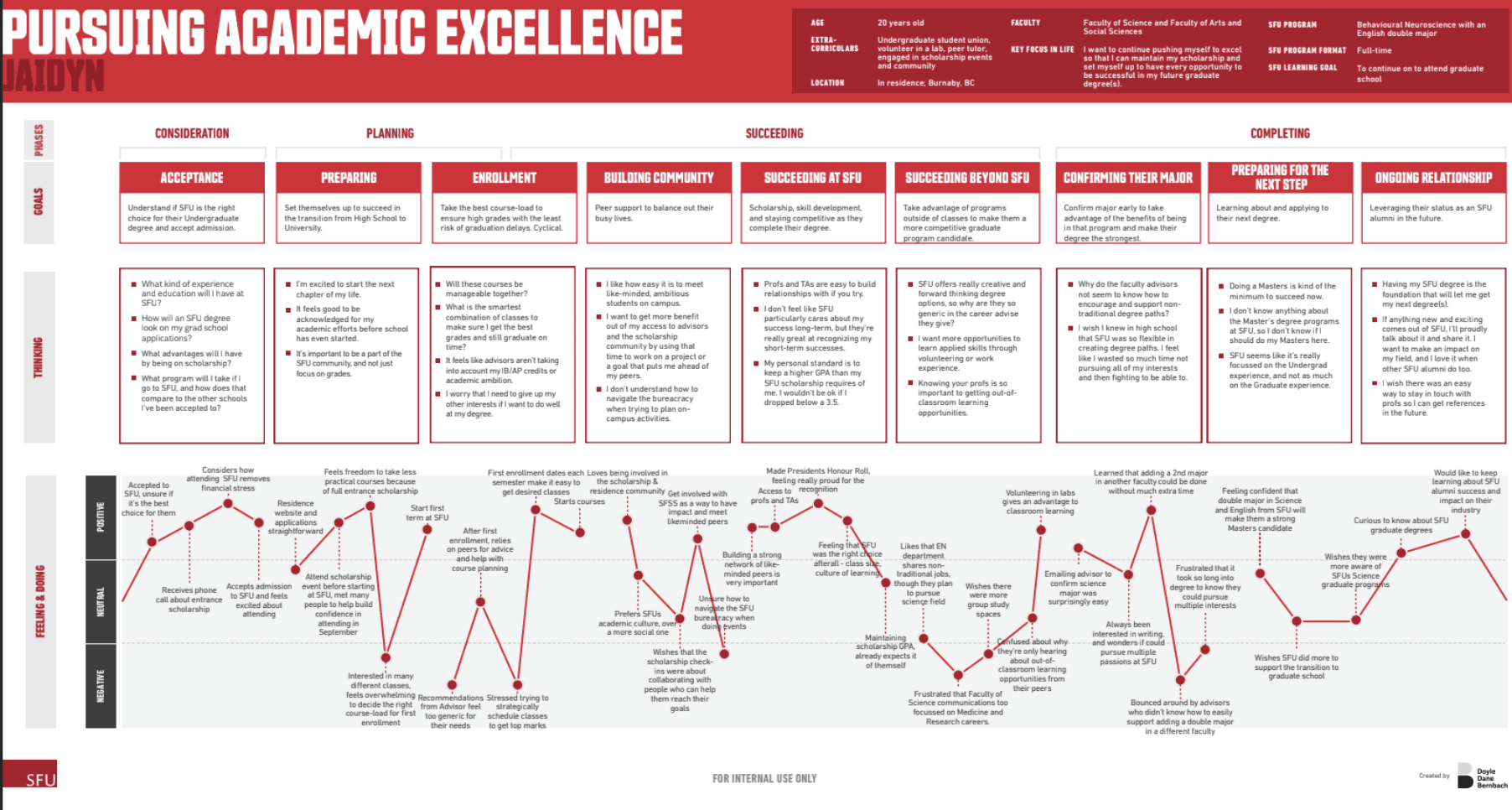
Underneath sat a structural problem. The domain is organized the way the university is organized, by faculty, while applicants move by decision: discover, qualify, compare, cost, apply. The most common question, whether a student is eligible and for what, had no reliable answer path.
How can a university turn the AI its future students already use into its strongest point of difference?
/
SOLUTIONS
An AI strategy that makes SFU’s own pages the answer
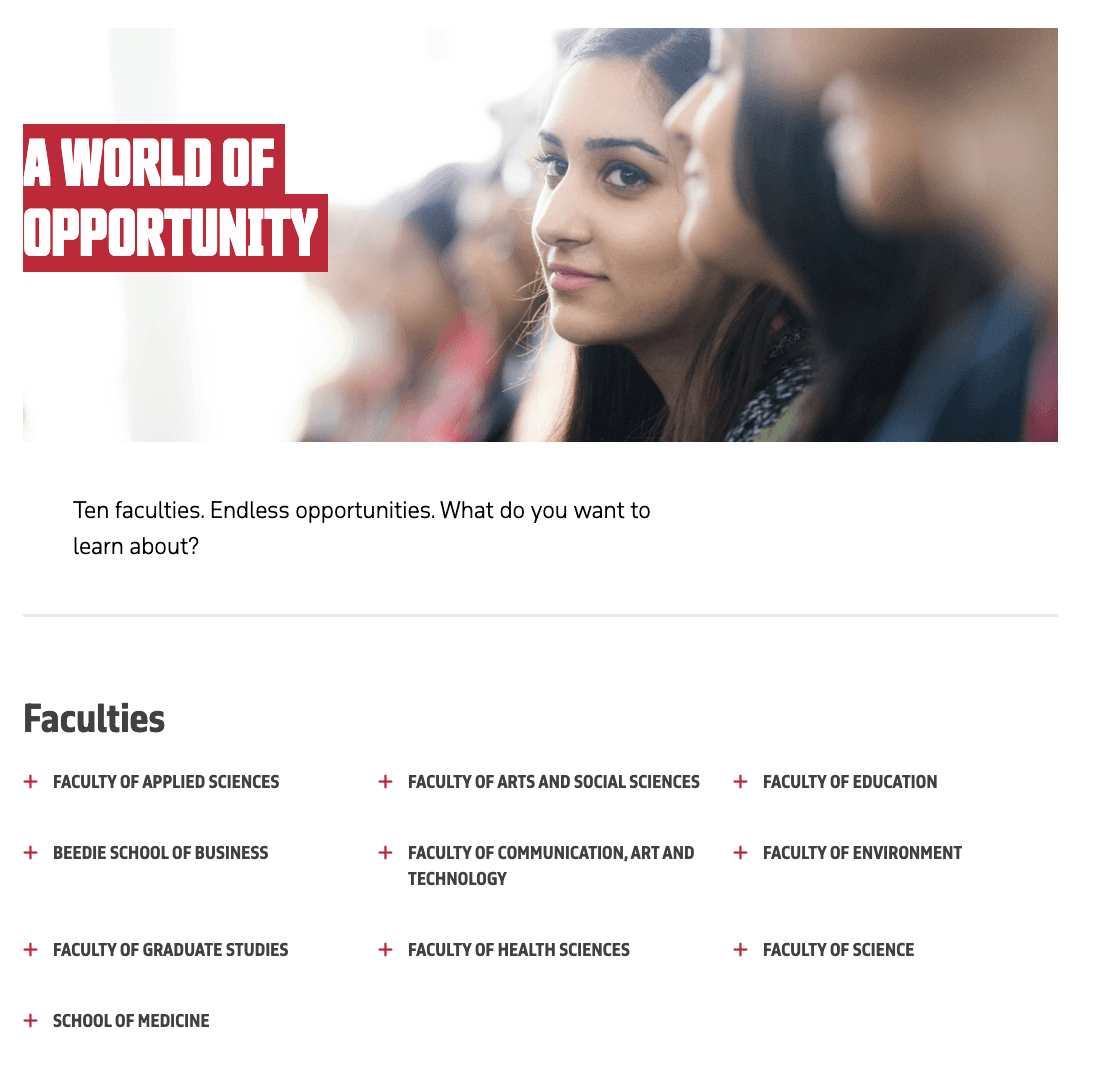
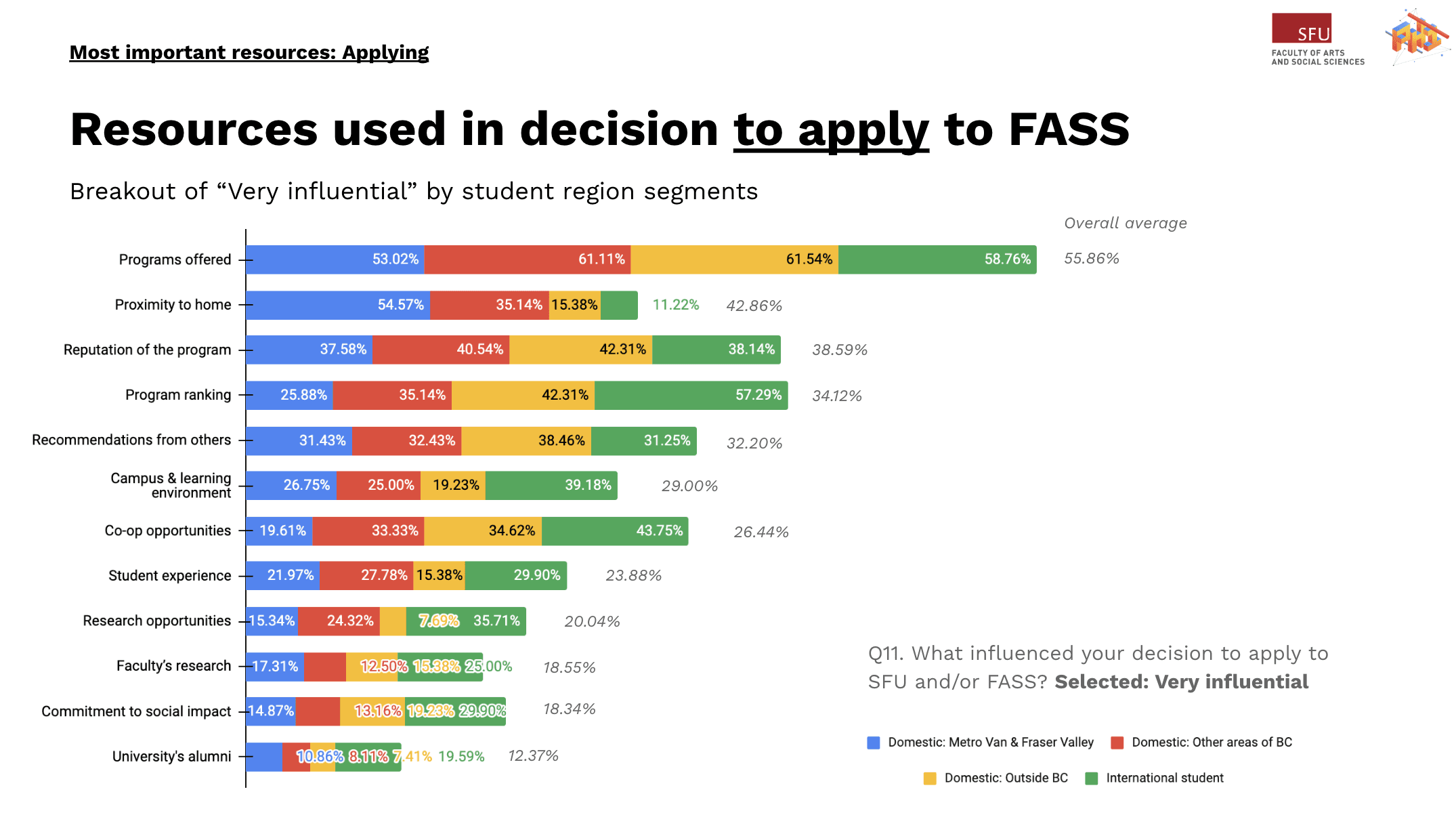
PH1 ran more than sixty interviews with applicants, high school counselors, recruitment and faculty staff, executive leadership, external partners and site users. The team mapped the critical journeys by student type, compared what sfu.ca and AI tools return for the same questions, and benchmarked SFU against the institutions students weigh it against.
The strategy gave SFU:
A single entry point for future students that holds programs, requirements, cost and pathways together
Eligibility as the first task of the domain, with a lookup that tells students what they can apply to
Program pages in one comparable structure, with total cost shown through worked examples
Transfer students treated as a primary audience, and named advisers on every program page
Structured, consistent content and metadata, so that when AI answers on SFU’s behalf it answers correctly and links back
Governance that stops a thousand sites from contradicting each other
An audience-based architecture tested with users, and a phased roadmap tied to measurable goals
/
RESULTS
The evidence and architecture to make AI SFU’s advantage
The work gives SFU the evidence and the architecture to turn AI from a source of errors into its point of difference: a domain organized around what applicants are trying to do, written to be cited correctly, and able to confirm the answer in the moment a student checks what an AI told them.
The lesson reaches beyond one university. Future students are already asking AI to compare institutions, and the universities that publish complete, structured answers that are easy to verify will be the ones those tools recommend.
Applicants ask AI first and come to the website to verify
Key finding
60+
Interviews across every audience
1,000+
Websites in scope
/
CASE STUDIES